
Truckee Alpine
Dog Lodge
Phase 1 Feasibility Study
Winter-Ready Dog Retreat Strategy
This concept study repositioned an ambitious alpine dog-retreat idea into a more practical, dog-centered, winter-ready Phase 1 strategy. The work focused on preserving the best parts of the original vision — light, warmth, mountain identity, and a premium retreat atmosphere — while reducing cost, operational risk, and construction complexity.
Multiple concept directions were reviewed, including a courtyard lodge, a future dog-village master plan, and a compact lodge with an attached winter greenhouse dog run. The recommended direction focused on a buildable first phase: one efficient alpine lodge, protected dog-care zones, secure yards, snow-country logic, and a clear path for future expansion.
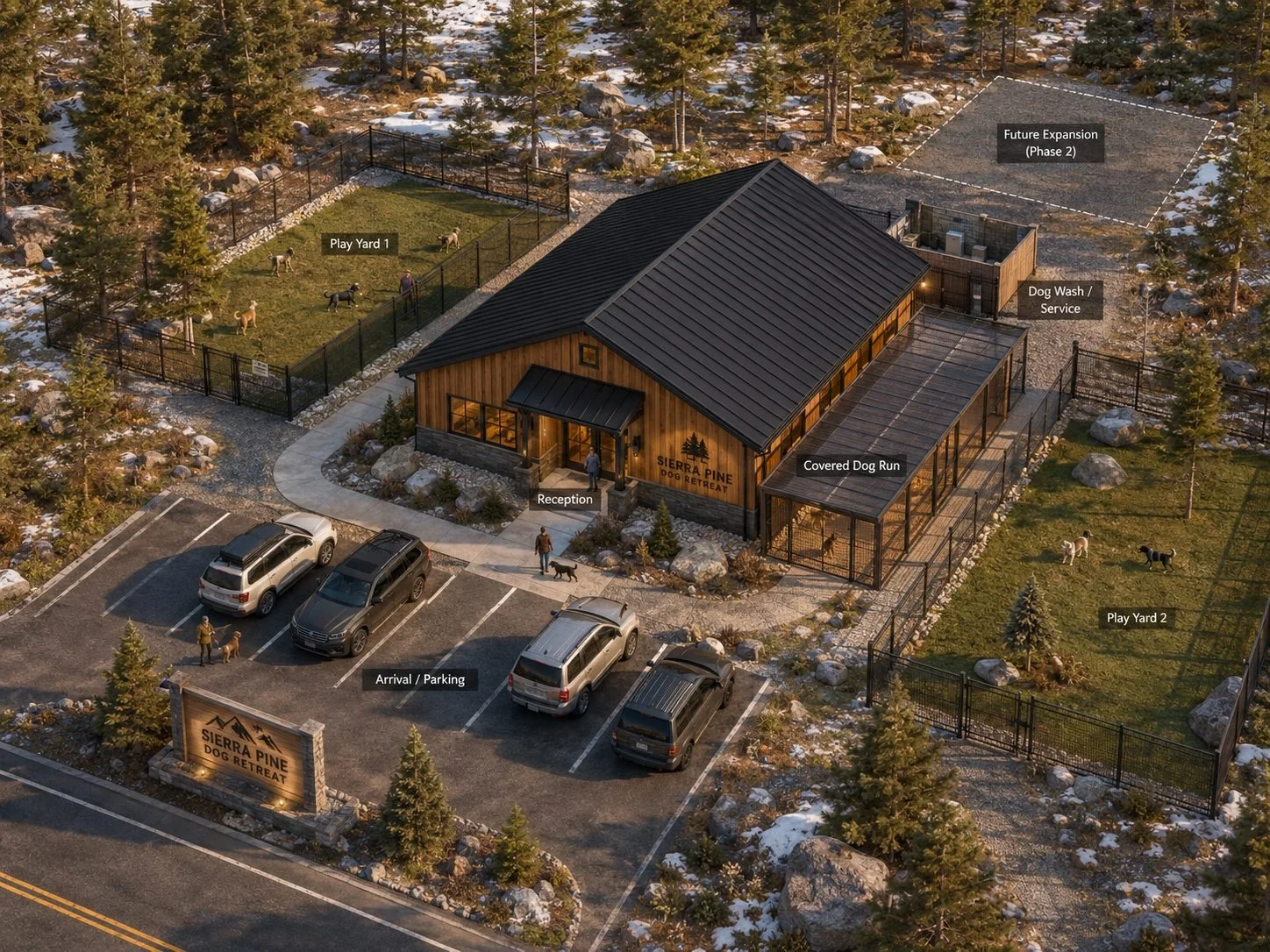
This study turns an ambitious dog-retreat vision into a more buildable, winter-ready hospitality concept.
The study focused on the gap between a strong hospitality vision and the operational realities of a Truckee dog-care business. The design needed to feel premium and memorable, but also support snow management, safe intake, secure dog transfer, staff visibility, wet/dry zones, separated play yards, and daily maintenance.
The recommended direction simplified the project into a compact alpine lodge with an attached covered dog run, clear arrival sequence, fenced play yards, and room for future expansion. The result is a practical Phase 1 concept that preserves the retreat identity without overbuilding the first move.
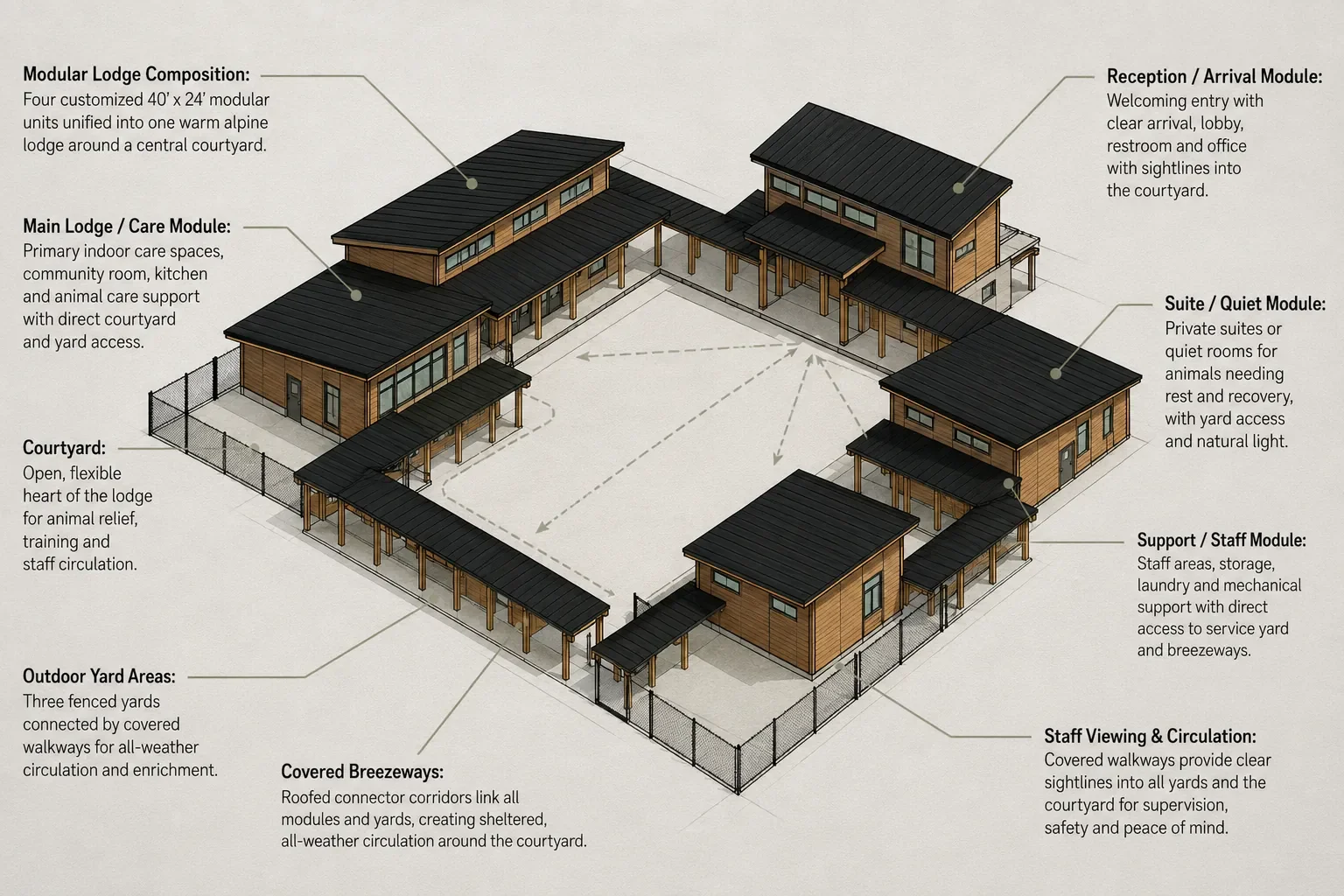
From architectural idea to operational strategy.
The concept study translated a broad retreat vision into a clearer operational framework: arrival, reception, secure dog transfer, covered circulation, separated yards, wash/service areas, staff visibility, and snow-country maintenance.
Rather than treating the project as a single image or architectural fantasy, the work focused on how the business would actually function in Truckee conditions. The result is a more disciplined Phase 1 strategy that supports safety, owner confidence, daily workflow, and future expansion.
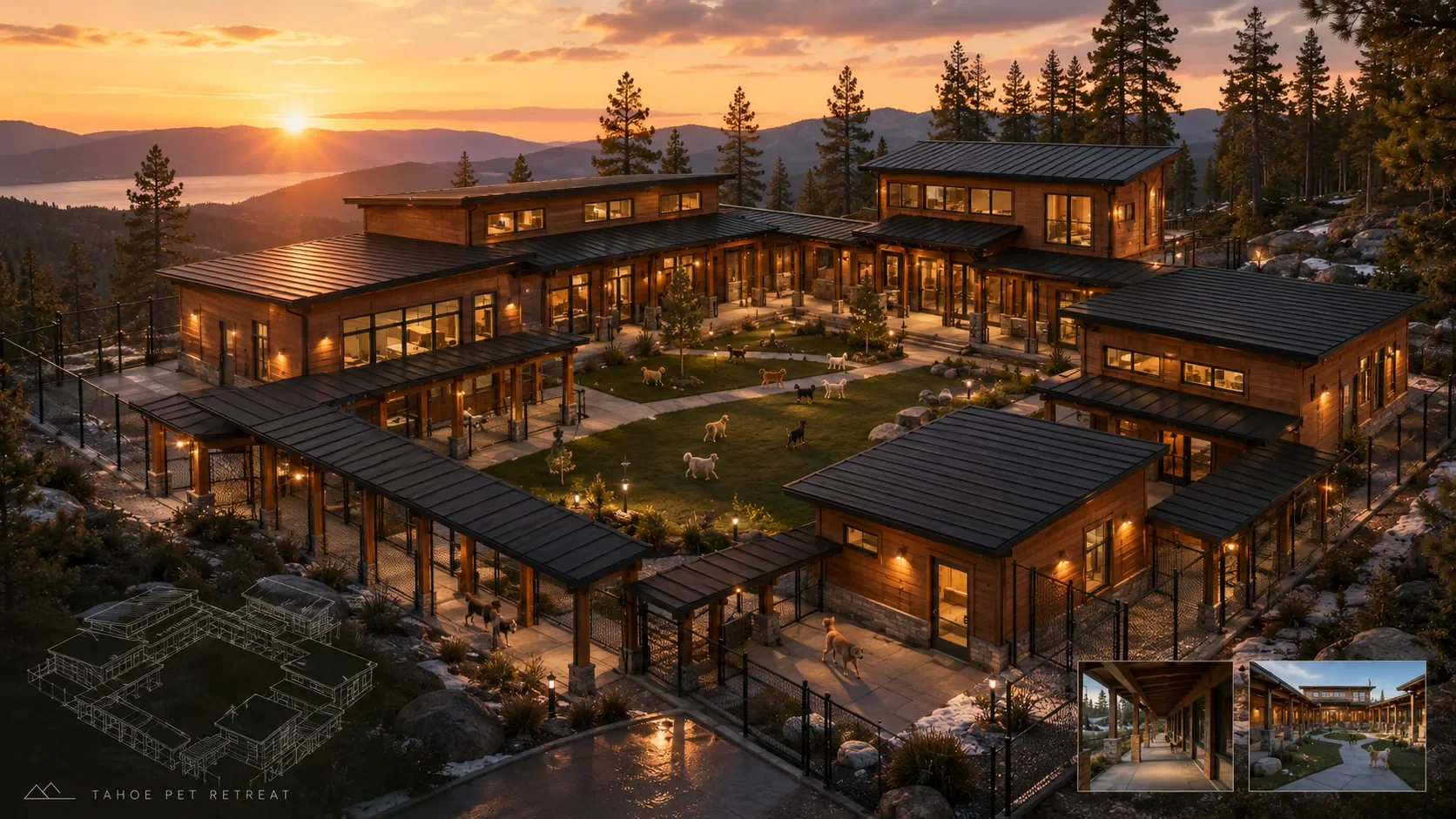
A premium retreat vision tested against real dog-care operations.
This phase explored the larger retreat vision: a lodge-centered canine campus with outdoor yards, covered circulation, staff support areas, and a strong hospitality identity. The goal was to understand how a premium dog-care destination could feel memorable without losing sight of safety, supervision, and daily operations.
The study helped separate long-term master plan potential from immediate Phase 1 priorities. The larger campus concept remains useful as a future growth vision, while the near-term recommendation focuses on a more compact, buildable, winter-ready first move.
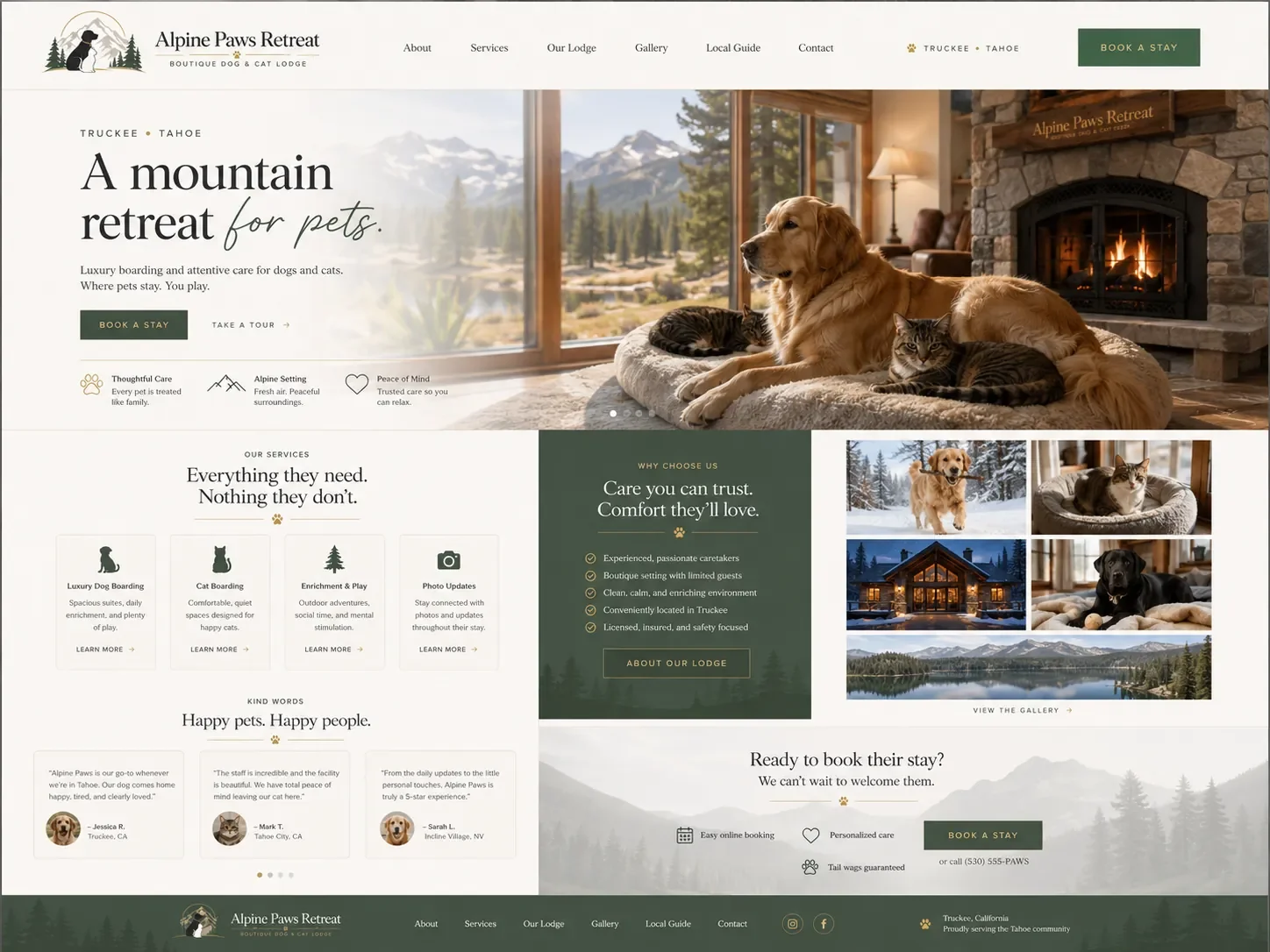
A business concept shaped into a brand, customer experience, and launch-ready presence.
Beyond the physical retreat concept, the study explored how the business could show up in the market: name, brand tone, visual identity, customer promise, service categories, booking flow, and the first impression a pet owner would experience online.
The website concept translated the retreat strategy into a warm, trustworthy hospitality brand — positioning the lodge as premium but approachable, operationally competent, and emotionally reassuring for owners leaving their pets in care.